
Back-to-School & Q3 Sourcing Playbook: What to Buy Now to Sell in August (2026)
Back-to-school peaks in August. What to source in late June and July, how to list for the rush, and a week-by-week pricing timeline.
If you only sell what's hot this week, you're always a step behind. The resellers who quietly clean up in late summer made their moves back in June and July, while everyone else was still thinking about Father's Day.
Back-to-school is the second-largest retail season of the year, behind only the winter holidays. And unlike the holidays, it has a long, predictable on-ramp: parents and students start buying in mid-July, the rush peaks across August, and a late wave of college move-ins and "we forgot something" purchases stretches into early September. That's a six-to-eight week selling window you can prepare for right now.
The catch is timing. The best inventory shows up at thrift stores, garage sales, and clearance racks in early summer, months before buyers are looking. If you wait until August to source, you'll be competing for picked-over shelves at peak prices. Source now, list in mid-July, and you'll have your items indexed and ranking before the wave hits.
This guide covers exactly what to buy today, how to write listings that convert for back-to-school shoppers, and how to price across the timeline so you catch every buyer.
Why Late June and July Is the Sweet Spot
Back-to-school buying follows a remarkably consistent curve every year:
- Mid-July: Early, organized parents start shopping. Search volume climbs.
- Late July through August: Peak. This is where the bulk of sales happen.
- Late August into early September: College move-in and last-minute restocks. The second wave.
Your job is to have inventory listed before the curve starts climbing. New listings take time to gain traction: photos get indexed, the platform learns the item, and you accumulate views and saves that feed the algorithm. An item you list in mid-July is in a far stronger position by early August than one you list the day buyers start searching.
That means your sourcing happens now. Late June and July is when summer thrift inventory is freshest, garage sales are everywhere, and end-of-season clearance creates retail arbitrage opportunities. You're buying into a quiet market and selling into a loud one, which is exactly where margins live.
What to Source for the Back-to-School Rush
Back-to-school demand clusters around a handful of dependable categories. Here's where to focus your energy and your sourcing budget.
Backpacks and Bags (Highest Priority)
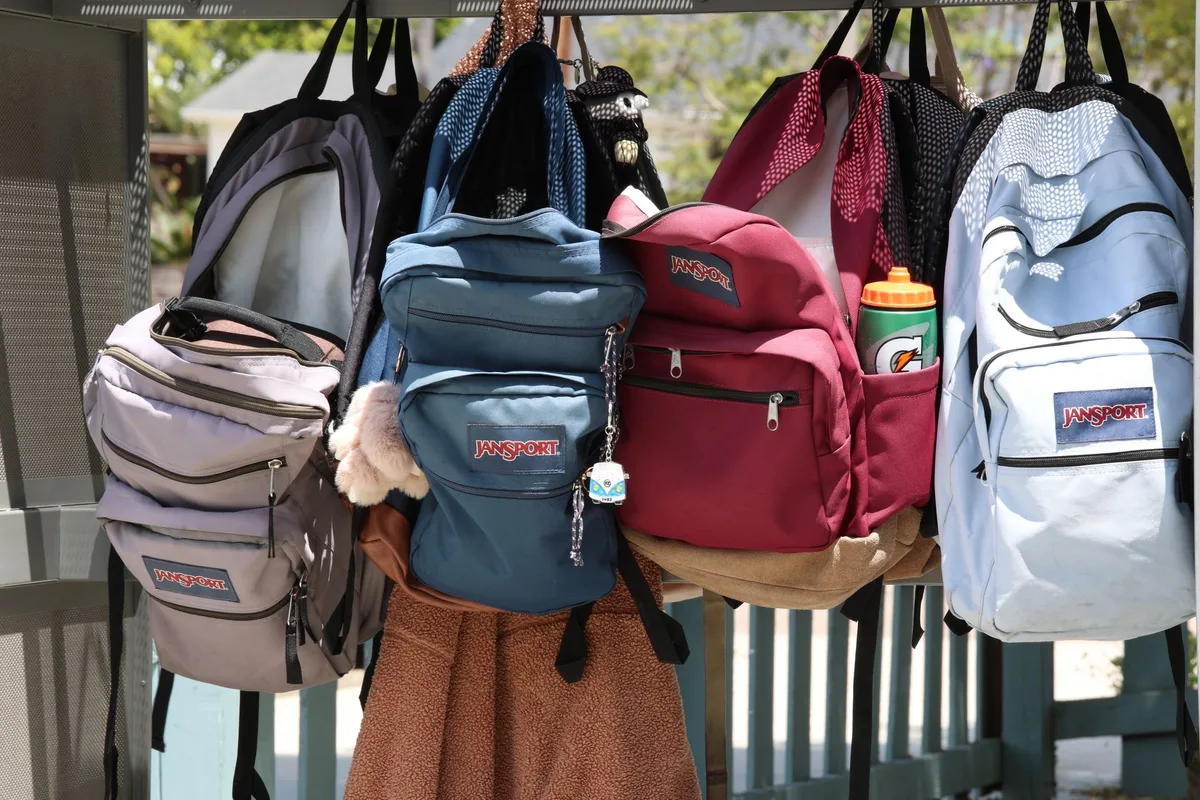
Backpacks are to back-to-school what tools are to Father's Day: the single strongest category. Parents replace them yearly, students want specific brands, and quality bags hold up beautifully secondhand.
What to look for:
- Premium and outdoor brands: JanSport, The North Face, Herschel, Fjällräven Kånken, Patagonia
- Rolling backpacks and laptop bags (commuter students and older kids)
- Licensed character backpacks for younger kids: popular franchises move fast
- Lunch boxes and insulated bags from the same premium brands
Sourcing tip: Check zippers, straps, and the bottom seams. These are the failure points. A clean, structurally sound name-brand pack that retails for $60–90 new can sell for $25–45 secondhand, and you'll often find them for a few dollars at thrift stores or garage sales.
 Photo by Ahmet Kurt on Pexels
Kids' and Teen Clothing
Back-to-school wardrobes drive enormous volume. Kids grow out of clothes constantly, and parents are actively rebuilding sizes in July and August.
- Brand-name kids' clothing in bundles by size (Nike, Adidas, Carter's, Gap Kids, Lululemon for teens)
- Uniform staples: polos, khakis, plaid skorts. Search demand spikes for specific school dress codes
- Outerwear sized for fall: buyers shop ahead for jackets and hoodies
- Athletic and team gear, cleats, and indoor sports shoes
Sourcing tip: Bundle by size and gender to raise your average order value. A "Boys size 7, 5-piece bundle" sells faster and for more total than five separate listings, and it cuts your shipping and listing labor dramatically.
 Photo by cottonbro studio on Pexels
Dorm and Apartment Goods
College move-in is its own selling season inside back-to-school, and it skews toward home goods. Students setting up first apartments need everything at once.
- Small appliances: mini-fridges, microwaves, single-serve coffee makers, electric kettles
- Storage and organization: shelving, bins, over-the-door organizers, desk lamps
- Bedding, mattress toppers, and small rugs (clean, odor-free only)
- Cookware sets, dishes, and small kitchen tools
Sourcing tip: Estate sales and garage sales are gold for this category. Move-in buyers value function over fashion, so even dated-but-working small appliances sell well when they're priced as a deal.
Electronics and Study Tools
The supply list for older students is increasingly electronic, and these items carry strong margins.
- Graphing calculators (TI-84 family especially): perennially in demand and easy to ship
- Laptops, tablets, and laptop accessories in good working order
- Headphones and earbuds from known brands
- Desk lamps, charging stations, and surge protectors
Sourcing tip: Always test electronics and note condition honestly. A working TI-84 alone can return several times its thrift-store cost, and the category is forgiving to ship.
Textbooks and Reference Material
Textbook flipping is a niche worth a corner of your back-to-school inventory, especially if you can scan ISBNs.
- Current-edition college textbooks (check the edition, old editions crater in value)
- AP and standardized test prep books
- Reference and required-reading titles for common courses
Sourcing tip: Use a scanning app to check sold comps before you buy. Editions matter enormously here, last year's edition can be nearly worthless while the current one holds real value.
 Photo by Max Fischer on Pexels
How to Write Listings That Convert for Back-to-School Buyers
Back-to-school shoppers are often busy parents buying with intent and a deadline. Your listing needs to answer their questions instantly.
- Lead the title with brand, item, size, and color. "JanSport Big Student Backpack (Navy) 34L" beats "Cute backpack good condition."
- State size prominently and accurately. Size is the number-one filter for clothing buyers. Put it in the title and the first line.
- Photograph the details that signal quality. Show zippers, tags, soles, screens powered on. Honesty about flaws builds trust and cuts returns.
- Use the season's keywords. Work "back to school," "dorm," "uniform," or "school supplies" into titles and descriptions where they fit naturally: that's what buyers are typing.
- Bundle deliberately. Group by size or theme to raise order value and clear inventory faster.
Pricing Across the Back-to-School Timeline
Match your pricing to where you are on the demand curve. The goal is to capture early-bird margins without getting stuck with inventory in September.
Mid-July (early birds): List at the top of your realistic range. Early shoppers are organized, less price-sensitive, and shopping ahead. You can hold firm. Make sure everything is listed by mid-July so it has time to gain traction.
Late July through August (peak): Hold your pricing through the peak. This is when the most buyers are searching, so demand does the work. Refresh or relist anything that's been sitting to push it back into search results, but resist the urge to discount while traffic is high.
Late August (college wave): Pivot dorm and apartment goods to the front. Small appliances, storage, and bedding peak here as move-in happens. Keep these priced as deals. This crowd buys fast and values convenience.
Early-to-mid September (clear the tail): The window is closing. Start marking down anything left, accept reasonable offers, and bundle aggressively to recover your capital. Better to free up cash and shelf space for Q4 holiday inventory than to hold seasonal items for a full year.
A pricing plan like this only works if you actually know your numbers, what each item cost, what you've spent on it, and how long it's been sitting. Tracking that as you source, rather than guessing in September, is what turns a good season into a profitable one. A tool like Flippd lets you log each item from purchase to sale, tag it by season, and see your true margin after fees, so you know exactly when an item is still earning and when it's time to mark it down.
Key Takeaways
- Source now, sell in August. The best back-to-school inventory shows up in early summer, months before buyers are looking. Buy into the quiet market.
- List by mid-July. New listings need time to gain traction: items live early are far better positioned when the rush hits.
- Lead with backpacks, kids' clothing, and dorm goods. These are the highest-volume, most dependable categories.
- Bundle by size and theme to raise order value and clear inventory faster.
- Price to the curve. Hold firm through the peak, then clear the tail in September rather than holding seasonal items for a year.
Get Ahead of the Curve
Seasonal reselling rewards the prepared. While most sellers are reacting to what's hot today, the ones doing the real work are sourcing for a season that's still six weeks out. It feels strange to buy backpacks in June, right up until August, when your shelves are stocked and theirs are empty.
Pick your categories, source while inventory is fresh and cheap, and have everything listed before the search volume climbs. Then let the season come to you.
Ready to track your seasonal inventory the right way? Flippd helps resellers log purchases, track inventory by season, and calculate true profit after all fees and expenses, right from your phone. iPhone, iPad, Android, Mac, Apple Watch, and Web.
Photo by Solé Gomez on Pexels