
Estate Sale Sourcing Guide 2026: How Resellers Work a Sale for Profit
Estate sales beat thrift stores on depth and price if you know how to work them. How to read a listing, when to go, what to buy, and how to make the math work.
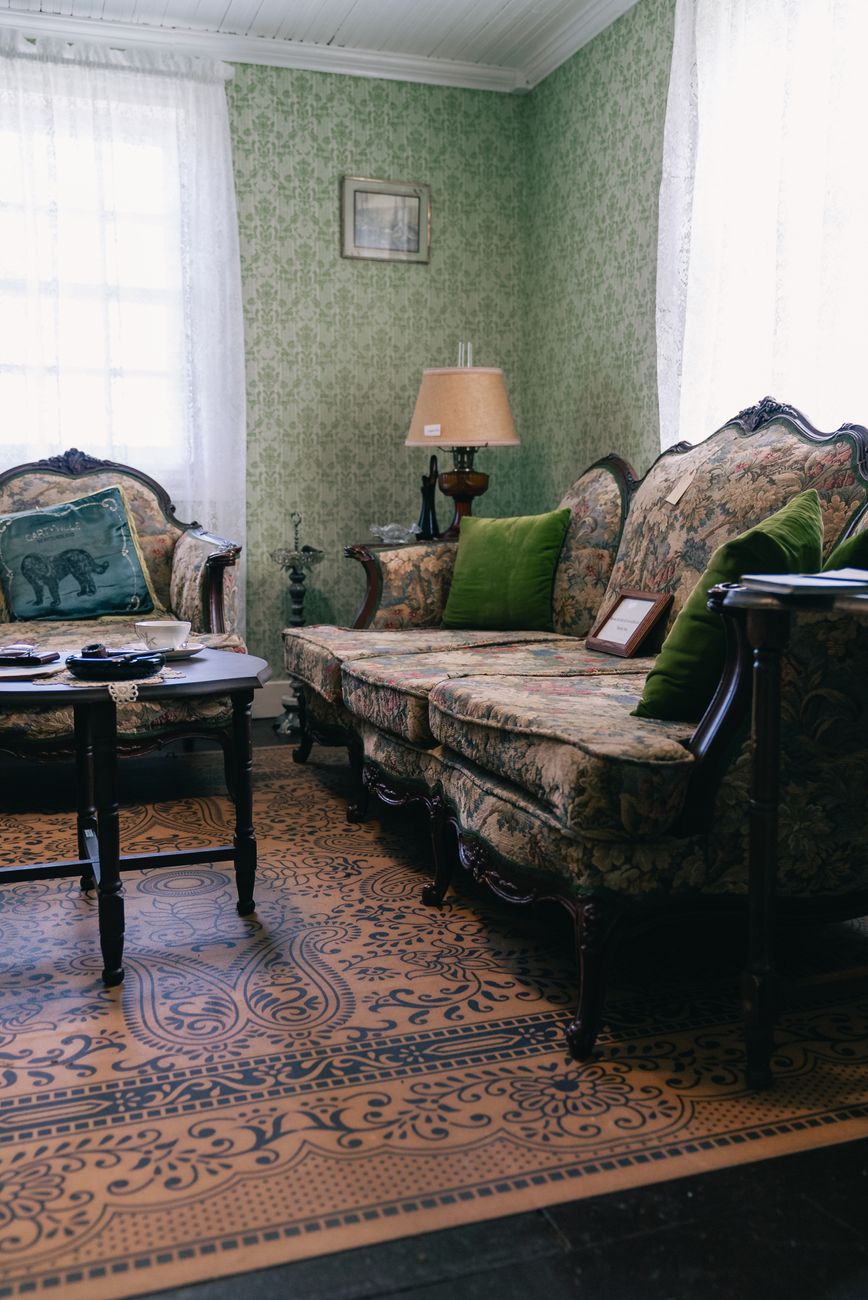
Every thrift store you walk into has already been picked. Donation sorters pull the obvious brands, the store prices what's left, and three other resellers were there at opening. An estate sale is different. It's one household, usually 40 to 60 years of accumulation, opened to the public for two or three days and then gone. Nobody has sorted it for resale value. The people running it are pricing to empty the house, not to maximize each item.
That's the whole opportunity. And September into October is peak season for it, because families clear houses after summer and before the holidays, and the weather still lets sale companies use garages and driveways.
If you've mostly sourced at thrifts and garage sales, estate sales feel intimidating at first: the early numbers, the crowd at the door, the dealers who seem to know exactly where to go. Here's how to work one properly.
How an Estate Sale Actually Runs
Most estate sales you'll find are run by a liquidation company, not the family. That matters because companies follow predictable rules.
| Day | Pricing | Who's there | Best for |
|---|---|---|---|
| Day 1 (usually Thursday or Friday) | Full price, firm | Dealers, collectors, serious resellers | The specific high-value items you spotted in the listing photos |
| Day 2 | Often 25% off | Regulars, weekend shoppers | Mid-value items the day-one crowd passed on |
| Last day | 50% off, sometimes "fill a bag" | Bargain hunters, resellers buying lots | Bulk buys, box lots, furniture, anything you can negotiate |
A few things first-timers don't expect:
- Numbers. Popular sales hand out numbers at the door starting an hour or more before opening, and let people in in groups. If a listing looks strong, arriving 45 minutes early is normal. Arriving at opening means you're number 60.
- Everything is priced, but not everything is tagged. Untagged items get a price from a staff member on the spot. Ask politely and accept the answer on day one.
- One receipt. You'll walk out with a handful of items and a single total. We'll come back to why that's a problem for your books.
- Payment varies. Most companies take cards now, but some are still cash-only or add a fee for cards. The listing will say.
The dealers at the front of the line aren't there because they love waking up early. They're there because day-one pricing at a good sale still beats thrift pricing for the categories they know.
Reading the Listing Before You Go
This is where the money is made, and it's the part most people skip. Estate sale companies post their sales on the major listing sites (EstateSales.net is the big one in the US, plus local company websites and Facebook) with dozens or hundreds of photos. Those photos are your map.
Look at what's in the background. The company photographs the things they think are valuable. You're looking for what they didn't feature: a shelf of Pyrex behind the featured china cabinet, a Craftsman toolbox in the corner of the garage shot, records in a milk crate under a table. Zoom in on every photo.
Read the house, not just the items. A mid-century ranch owned by the same couple since 1965 is a very different sale from a 2010s townhouse. Older houses with long ownership mean deeper closets, workshops, and attics. Look for cues: the age of the kitchen, the style of the furniture, framed military photos, a sewing room.
Look for the words that signal depth. "Contents of workshop," "lifetime collection," "50 years of accumulation," "garage and basement full," "everything must go." The listings that say "curated selection of furniture and decor" are staged sales from a cleaned-out house, and there's rarely much left for a reseller.
Check the terms. Discount schedule, payment types, whether they allow bags or require you to check them, whether there's a numbering system. Some companies post the discount schedule up front; others make you ask.
Map the week. On a good weekend in a mid-sized metro there might be eight to fifteen sales. You can't hit them all on day one. Rank them by listing quality, hit your top one or two at opening on day one, and plan last-day visits for the rest.
What to Buy: The Categories That Consistently Pay
Estate sales have a different inventory profile than thrifts. Less fast fashion, far more of the stuff that only turns up when someone empties a house they've lived in for decades. These are the categories experienced estate sale resellers keep coming back to.
Vintage hand tools and shop equipment
The garage and basement are usually the least crowded rooms at a sale and often the most profitable. Look for Stanley and Bailey planes, Starrett and Brown & Sharpe measuring tools, Snap-on and older USA-made Craftsman wrenches and socket sets, Disston saws, wooden-handled chisels, and anything from a machinist's toolbox. Complete socket sets in their original metal case sell well as a unit. Individual precision tools sell better one at a time.
Vintage tools are heavy, so keep shipping in mind. Small precision tools ship cheap in a padded mailer and often sell for more than a big wrench set that costs $25 to ship.
 Photo by Carel Voorhorst on Pexels
Kitchen and glassware
This is the category people think they know and mostly don't. Yes, Pyrex in a sought-after pattern (Butterprint, Gooseberry, Pink Daisy, the primary color mixing bowl set) still sells. But so do: Fire-King Jadeite, Corning Ware in Blue Cornflower and Spice of Life, Dansk Kobenstyle enamelware, Le Creuset in any condition, Griswold and Wagner cast iron, Fenton and Fostoria glass, Waterford and Lenox, and vintage Tupperware in complete sets.
The trick with glassware is condition and completeness. A Pyrex bowl with dishwasher damage (a dull, chalky finish) is worth a fraction of a glossy one. A set of eight matching glasses is worth far more than eight singles. Run your fingers around every rim for chips before you buy.
Costume jewelry, and the real stuff hiding in it
Estate sales almost always have a jewelry table, and it's almost always the most crowded spot in the house on day one. The pros are there for signed costume pieces (Trifari, Coro, Weiss, Eisenberg, Miriam Haskell, Monet, Napier) and for anything that turns out to be sterling or gold. Bring a jeweler's loupe and a magnet. Sterling is stamped 925 or "sterling" and isn't magnetic. Gold is stamped with karat marks. Unmarked heavy pieces are worth a second look, and a lot of resellers have paid $3 for a "costume" bracelet that tested as 14k.
 Photo by Eugenia Remark on Pexels
If the jewelry room is a scrum, skip it on day one and work the rest of the house. Whatever's left on the last day is half off and the crowd is gone.
Paper, ephemera, and the stuff in drawers
Postcards, old photographs, matchbooks, maps, advertising pieces, vintage magazines, sheet music, sewing patterns from the 40s through the 70s, old greeting cards, and local history material. None of it is glamorous and almost all of it is priced by the box. Ephemera sells slowly but at margins that are hard to match, and it ships for the cost of a stamp. Look in desk drawers, sideboards, and the bottoms of closets.
Records, cameras, and hi-fi
Records are picked hard by day-one dealers, but they're often looking for specific genres. A collection that's mostly easy listening might have a few jazz or soul titles that were overlooked. Cameras and lenses are a strong category if you can test them; bring a battery for the common types. Vintage receivers from Marantz, Pioneer, Sansui, and Kenwood sell well even untested if they're clean, and the heavier they are, the more local pickup makes sense.
The reliable middle
Sewing machines (a Singer Featherweight 221 is the famous one, but many vintage all-metal machines sell), vintage Christmas ornaments (Shiny Brite boxes), fountain pens, fishing lures and tackle boxes, military items, men's vintage workwear and outerwear, quality luggage, board games from the 60s through the 80s, vintage linens and quilts, and older cookbooks.
What to leave
Mass-produced furniture unless you have a truck and a local market for it. Upholstered anything. Encyclopedias. Most china sets (a full set of grandmother's Noritake is a hard, slow sell). Anything chipped, cracked, or missing parts unless it's rare enough that buyers accept that.
 Photo by Semanur Çoban on Pexels
Working the Sale
Day one: go in with a list. You've read the photos. You know the three or four items you're there for. Go straight to them. Don't browse until you've found or lost the things on your list, because someone behind you is doing exactly that.
Carry a box or a bag. Most sales have a "hold" area where staff will keep your pile, but a collapsible crate or an IKEA bag means you don't have to walk back and forth. Ask about their hold policy when you get your number.
Don't negotiate on day one. Companies price for a schedule and they've heard every pitch. On the last day, negotiation is expected. "Would you take $40 for everything in this box?" is a normal question at 2pm on Sunday, and the answer is usually yes.
Ask staff what's in the garage, the attic, and the basement. Not everything makes it into the photos, and some of it isn't even out on tables. Staff usually know.
Be pleasant. Be memorable for the right reason. The same handful of companies run most sales in any area. Staff notice who's polite, who doesn't hide items behind other items, and who shows up regularly. Those people get told about a sale before it's listed, or get the "we'll have a lot of tools next weekend" heads up. That's worth more than any single find.
What to bring: small bills, a loupe, a magnet, a small flashlight, a tape measure, a phone with sold comps loaded, a bag or crate, and hand sanitizer. Estate sales are dusty.
Making the Math Work
Estate sale sourcing has two costs thrift sourcing doesn't: time and driving. A morning at a sale with a number is three hours. A weekend circuit might be 60 miles. If you're not tracking those, your margins look better than they are.
The other problem is the one-receipt issue. You'll buy eleven things for $84 and the receipt says $84. If you don't split that cost across the items right away, you'll never know which of the eleven actually made money. A lot of resellers who "do great at estate sales" have no idea whether the tools or the jewelry or the box of postcards is carrying the trip.
Pro Tip: Log each item before you leave the driveway, with what you paid for it and which sale it came from. Flippd lets you record the purchase, assign a cost to each item, and log the mileage for the trip, so when the last of those eleven items sells in November you'll see the real margin per item and per sale, not a guess.
Before you buy anything heavy or awkward, run it through the Profit Calculator with a realistic shipping number. A $30 vintage receiver that sells for $180 looks great until the box costs $45 to ship and the platform takes its cut. And if you're deciding where to list what you found, the Fee Comparator will show you quickly that a $12 postcard and a $200 Starrett micrometer don't belong on the same platform.
Key Takeaways
- The listing photos are the sale. Zoom in on backgrounds, read the house, and look for words like "workshop," "lifetime collection," and "basement full."
- Day one is for the specific items you came for. The last day is for lots and negotiation. Plan the week that way instead of trying to be everywhere at opening.
- Work the rooms the crowd skips. Garage, basement, desk drawers, and closets are where the untouched inventory is.
- Bring a loupe and a magnet. The jewelry table is where costume-priced sterling and gold hide.
- Split the receipt before you leave. Cost per item and mileage per trip are the difference between knowing your estate sale margin and guessing at it.
A Different Kind of Sourcing
Thrift stores reward volume and speed. Estate sales reward preparation. The reseller who spends twenty minutes reading a listing on Tuesday night and shows up with a list on Friday morning will out-source the one who wanders in Saturday afternoon, every single time. Start with one good sale this weekend, work it properly, and track what you bought. By October you'll know which categories pay for you and which sales companies are worth following.
Ready to make your next estate sale trip actually add up? Flippd helps resellers log purchases, track inventory, and calculate true profit after all fees and expenses, right from your phone. iPhone, iPad, Android, Mac, Apple Watch, and Web.
Photo by Erik Mclean on Pexels